I was pleased to see so many moviegoers under the age of eighteen at the Sunset Boulevard screening. A ten-year old sitting next to me laughed every time Gloria Swanson showed her face. His mother explained to him all the things he couldn't know throughout the film ("she's a famous gossip columnst, that guy was head of Paramount, etc."). When one of the actors mentioned "the West Side", the boy asked, "What's that?"
Mother: The West Side, that's where we live. Do you know where Hollywood is?
Boy: The North?
Mother: No, Hollywood is the East Side.
Yeah, well, I guess Hollywood is on the East Side if you live in Santa Monica. I've always thought of it as central. But if Hollywood is on the East Side, what's downtown, or East L.A.? Or Whittier?
Also pleased that the plot of Sunset Boulevard is set in motion in a manner true to Angeleno life: Joe Gillis doesn't want to lose access to his car. Thom Andersen must have made this point in Los Angeles Plays Itself, no? I can't remember. I only remember Jack Nicholson's Jake Gittes in Chinatown (hmmm...Jake Gittes...Joe Gillis) described as "castrated" because he has no wheels.
Saturday, August 20, 2005
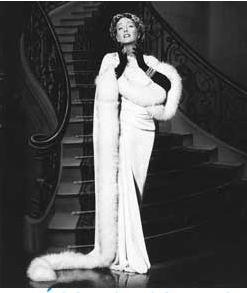 I was flabbergasted to see the names Erich von Stroheim, Cecil B. Demille, Hedda Hopper, and Buster Keaton flash onscreen during opening credits to Billy Wilder’s Sunset Boulevard, which surprisingly, stupidly, along with Double Indemnity, I had never seen before last night (American films of the 1930s through 50s, noirs especially, are a blind spot in my film knowledge). Why have I avoided seeing these films for so long? I was instantly enraptured. Watching them, I felt little pieces of cinema history and pop culture fall into place (Oh! So that’s where “I’m ready for my close-up now, Mr. Demille” comes from…Mulholland Drive makes so much more sense to me now…Barton Keyes…Barton Fink). It was the same feeling I had a few years ago hearing a fairly decent Beatles tune I had somehow never heard before ("Hey Bullfrog"). The mix of comedy and suspense in Sunset is masterful. With every line and every scene my jaw dropped a little lower. That there was a monkey-in-the-coffin bit was especially delightful. Double Indemnity, more straight noir, was also excellent, though I was initially disappointed to see the same story flashback structure used in both films. I suppose these films are old hat for most filmgoers, so please excuse my excitement, and slap me for my negligence.
Thursday, August 18, 2005
I have a feeling this is a dream, but...Beck, Thurston Moore, the Arcade Fire, the Yeah Yeah Yeahs, Rilo Kiley, Devendra Banhart, Elvira, David Cross (!), Malcolm McLaren, Peaches, Roky Erikson, Postal Service, Sparks and others collaborate on a We Are the World style Halloween song with proceeds going to UNICEF. A link to Said the Gramaphone who has "Do They Know It's Halloween" on mp3.
Wednesday, August 17, 2005
I freely and somewhat embarrassingly admit that this thought (Slavoj Zizek, "Give Iranian Nukes a Chance") has more than once crossed my mind, only to be immediately rejected as absurd. I suppose this is a devil's advocate argument intended to make a larger political point (which is, what...America must be stopped?) but Zizek is floating in space here, and makes too many mistakes (Iran an Arab state?) to be taken seriously. Rewrite it and then we can talk.
Monday, August 15, 2005
Poet Jen Hofer (“like offer, not like gopher”) was kind enough to open her home Friday night to the Angeleno rabble by hosting and co-curating , with filmmaker David Gatten, an evening of cinema & poetry entitled The Moving Word.
The evening began with a film by Janie Geiser, followed by Will Alexander reading from his latest book, Exobiology as Goddess. There were also films by Paolo Davanzo (who runs the Echo Park Film Center), David Gatten, Adele Horne, Lewis Klahr (with music by Rhys Chatham), Lisa Marr, and Lee Anne Schmitt, as well as readings by Haryette Mullen, Jane Sprague, Diane Ward, and Jen Hofer. Quite a lot to take in, and I didn’t even mention the pre-show impromptu musical performances (a group of people, I don’t know who, played incredible old-timey country & bluegrass music, two guitars & a fiddle). Sorry I don’t have specifics, I didn’t take notes. Jane Sprague read from “White Footed Mouse, Field Notes” which you can read online in a PDF document of the journal ecopoetics no. 3.
Also got to talk a bit with Ara Shirinyan, and finally got to meet Stan Apps & Mathew Timmons (at least I think it was M. Timmons...I didn't catch the last name, correct me if I'm wrong).
Oh yeah, I joined the Totally Obvious blog and will be posting there occasionally.
Wednesday, July 20, 2005
The CBC has an interesting archive of great interviews. This morning I checked out a haunting 1977 interview with Iggy Pop...haunting not because of anything Iggy says, necessarily, but because of the long silences, the "dead air" time, which seems so alien to my experience of television. No producer or talk show host today would tolerate such silence, which is a shame, because the silence, the gaps where Iggy searches for words, though possibly an act, are the most compelling parts of this interview.
Friday, July 15, 2005
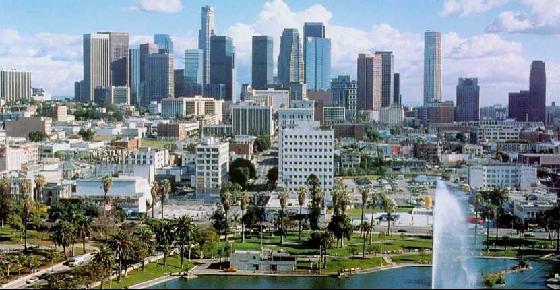
My city worries me. The iconic, Disney-sponsored,
"He's provocative, he's controversial and unafraid," they say. "He is a visionary, and he needs to execute that."
Moving sideways, Mike Davis describes one possible future for
Be sure to check out the artificial archipelago of The World and the future tallest building in the world, Burj Dubai.
Thursday, July 07, 2005
Last night, re-reading Don Delillo’s White Noise, I note the quote:
All plots tend to move deathward. This is the nature of plots. Political plots, terrorist plots, lovers’ plots, narrative plots, plots that are part of children’s games. We edge nearer death every time we plot. It is like a contract that all must sign, the plotters as well as those who are the targets of the plot.
And rise this morning to the terrible news from London. What comes next?

Genome Circle Plots
All plots tend to move deathward. This is the nature of plots. Political plots, terrorist plots, lovers’ plots, narrative plots, plots that are part of children’s games. We edge nearer death every time we plot. It is like a contract that all must sign, the plotters as well as those who are the targets of the plot.
And rise this morning to the terrible news from London. What comes next?

Genome Circle Plots
Meanwhile, googling “murderous innovation” (don’t ask) I come across strange gambling pages strung with oddly compelling phrases like, “A global cager rejoices” and “sometimes a cowgirl related to The Parisian hibernates” and “the harpullia is incontestable”. Who is the Parisian?
I believe these are spam pages filled with nonsense sentences designed to attract wayward searchers like myself. Though I could be wrong.
Elsewhere, Jane Dark analyzes the chilling picture of the day.
~ ~ ~
Candyland : Big
as
A) NAFTA : The
B) Ray Harryhausen : 9/11
C) Benny Hill : Romeo Montague
D) Mark David Chapman : Captain Ahab
Friday, July 01, 2005
Reading Frank Kermode's review (the article is not on-line) of John Carey's What Good Are the Arts? in the London Review of Books, I came across this:
A long final chapter on literature proclaims its superiority over all other arts. It is the only one capable of reasoning and the only one that can ‘criticise itself’ or indeed criticise anything; it is also the only art capable of moralising.
Is this true? Granted, I haven't read the book, and this paraphrase may depend on missing context, but as it stands it seems outrageously false. Most visual art from the post-war period to the present has been engaged in an ongoing critique of its own practices and assumptions (viz. minimalism, institutional critique, conceptual art), and one could make a case that Jean-Luc Godard's entire oeuvre is critical of other films as well as the medium of film itself.
A long final chapter on literature proclaims its superiority over all other arts. It is the only one capable of reasoning and the only one that can ‘criticise itself’ or indeed criticise anything; it is also the only art capable of moralising.
Is this true? Granted, I haven't read the book, and this paraphrase may depend on missing context, but as it stands it seems outrageously false. Most visual art from the post-war period to the present has been engaged in an ongoing critique of its own practices and assumptions (viz. minimalism, institutional critique, conceptual art), and one could make a case that Jean-Luc Godard's entire oeuvre is critical of other films as well as the medium of film itself.
Thursday, June 30, 2005
Wednesday, June 29, 2005
Have I given up the ghost for good? Forgot my obligations? No, no, no, I've just crept back for business. I've been shaken lately by the opening of wounds decades closed -- annoying fatuations -- and two of the men I admire most in life have very nearly asked of Anubis, "Why not weigh me?" One still asks. Was King Tut worth his weight in gold?
Judging by the King Tutankhamun exhibit at LACMA, I'd have to say, ehhhh. Woke up at about 5am to get in line. This must be the first museum show I've ever seen that's sold and structured just like a ride at Disneyland. The wait in line is about 2 hours. While in line, you gape at the people, engage in small talk, or munch on the free Krispy Kremes supplied by the museum. Every once in awhile, as you creep forward, you pass fake Egyptian columns or statues made of plaster. When you finally reach the end of the line, you and 50 other souls gather in a tiny room, the doors close around you (locked in! Just like Disney's Haunted Mansion ride!) and a short video narrated by Omar Sharif plays on widescreen tv. When it's over, a door mysteriously opens, and an illuminated bust of Tut awaits.
The conversation you hear at large-scale museum shows is a swamp of disinformation and honest naïveté ("Tut must have payed a lot of money for the workers he hired to make these artifacts" or "Why'd they raid his tomb, anyway?"). The show itself? Perhaps it's a bit post-modern of me, but I've seen so many fake Egyptian artifacts, good reproductions apparently, that the real things carried no aura for me. The fake stuff you see while standing in line doesn't help in this regard. I turned a corner in the show and saw a huge, beautiful bust of an Egyptian god, sure that it was another prop. (I'm reminded of Dylan's song Isis, "I broke into the tomb, but the casket was empty. There was no jewels, no nothin'! I felt I'd been had"). There were, however, a few wonderful pieces that rekindled my childhood dream of being an archaeologist (I only wanted to be an archaeologist of the 20s or 30s, fighting fascists and swinging from whips). An intricately carved child's chair, giant model ships, golden statues of falcon-headed Horus, gold necklaces ("I was thinkin' about turquoise, I was thinkin' about gold, I was thinkin' about diamonds and the world's biggest necklace"). The biggest disappointment, though, was that the iconic pieces you think about when you think about Tut (the golden death-mask and coffin) were nowhere to be found. They were too expensive to insure for travel to the United States.
Judging by the King Tutankhamun exhibit at LACMA, I'd have to say, ehhhh. Woke up at about 5am to get in line. This must be the first museum show I've ever seen that's sold and structured just like a ride at Disneyland. The wait in line is about 2 hours. While in line, you gape at the people, engage in small talk, or munch on the free Krispy Kremes supplied by the museum. Every once in awhile, as you creep forward, you pass fake Egyptian columns or statues made of plaster. When you finally reach the end of the line, you and 50 other souls gather in a tiny room, the doors close around you (locked in! Just like Disney's Haunted Mansion ride!) and a short video narrated by Omar Sharif plays on widescreen tv. When it's over, a door mysteriously opens, and an illuminated bust of Tut awaits.
The conversation you hear at large-scale museum shows is a swamp of disinformation and honest naïveté ("Tut must have payed a lot of money for the workers he hired to make these artifacts" or "Why'd they raid his tomb, anyway?"). The show itself? Perhaps it's a bit post-modern of me, but I've seen so many fake Egyptian artifacts, good reproductions apparently, that the real things carried no aura for me. The fake stuff you see while standing in line doesn't help in this regard. I turned a corner in the show and saw a huge, beautiful bust of an Egyptian god, sure that it was another prop. (I'm reminded of Dylan's song Isis, "I broke into the tomb, but the casket was empty. There was no jewels, no nothin'! I felt I'd been had"). There were, however, a few wonderful pieces that rekindled my childhood dream of being an archaeologist (I only wanted to be an archaeologist of the 20s or 30s, fighting fascists and swinging from whips). An intricately carved child's chair, giant model ships, golden statues of falcon-headed Horus, gold necklaces ("I was thinkin' about turquoise, I was thinkin' about gold, I was thinkin' about diamonds and the world's biggest necklace"). The biggest disappointment, though, was that the iconic pieces you think about when you think about Tut (the golden death-mask and coffin) were nowhere to be found. They were too expensive to insure for travel to the United States.
Friday, June 17, 2005
Another writer I admire has started a blog: Dennis Cooper.
I remember my freshman year of college when Professor Earl Jackson, Jr. read some excerpts from Frisk in class and a preppy girl sitting next to me scrawled in her notebook, "Note: avoid Dennis Cooper."
It would be great if other writers associated with the New Narrative would start blogging. Dodie Bellamy and Kevin Killian would be excellent bloggers, addictive reads. I've read some of Killian's blog-like entries on the Poetics List and he's a natural.
I remember my freshman year of college when Professor Earl Jackson, Jr. read some excerpts from Frisk in class and a preppy girl sitting next to me scrawled in her notebook, "Note: avoid Dennis Cooper."
It would be great if other writers associated with the New Narrative would start blogging. Dodie Bellamy and Kevin Killian would be excellent bloggers, addictive reads. I've read some of Killian's blog-like entries on the Poetics List and he's a natural.
Thursday, June 16, 2005
Thursday, May 05, 2005
Thursday, April 21, 2005
Caught old avant-gardeners (to steal a phrase from Josh Corey’s committee chair) Michael Snow and Tony Conrad at the Getty Tuesday night. Snow showed a “remixed” version of his classic Wavelength that managed to betray the promise of its title, WVLNT—Wavelength for Those Who Don't Have the Time. I suppose it’s a pun, since this version was shortened from 45 to 15 minutes, and if Wavelength is about anything it’s about the concept of time and duration (for those not in-the-know Wavelength is one seemingly continuous 45 minute zoom through a room – though it’s actually several different takes –that ends on a photograph of ocean waves, accompanied by a sine-wave electronic soundtrack); but someone watching WVLNT without having seen Wavelength will not get a condensed or Cliffs Noted version; rather she’ll see an entirely different film, as WVLNT super-imposes three sections of the film and soundtrack, running them simultaneously. In this case I’d suggest sticking with the classics. Snow also disappointed by implying he’s against remix culture and artistic appropriation. When explaining why he made this new version of Wavelength, and why there's no DVD copy of the original available, he replied that Wavelength should only be seen in its original medium (which I agree with) and that these days young people can remix anything once it’s in a digital format. He figured he’d remix it himself before another artist got his hands on it. I guess he wants to avoid the fate of John Baldessari.
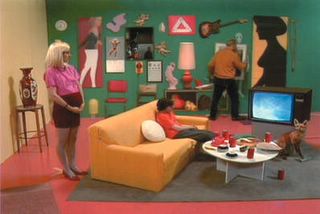
from Living Room by Michael Snow
Snow also screened See You Later/Au Revoir, and The Living Room, the latter notable for using digital effects now common in manyHollywood films. Here I think Snow has achieved something; he’s made a decidedly non-kitsch film entirely out of kitsch components. Living Room reminded me somewhat of that famous Richard Hamilton collage with a muscle-man in a living room, but in an interview Snow says it’s just coincidental. Regarding See You Later/Au Revoir (in which a 30 second shot of a businessman getting up from his desk, passing by his secretary, and leaving the office is slo-moed to last 18 minutes), I was quite surprised to learn of the non-theoretical intent of the piece – I figured a hardcore structuralist like Snow would have a complex theory behind his work. In conversation he basically said that he just thought it would be interesting to slow things down.
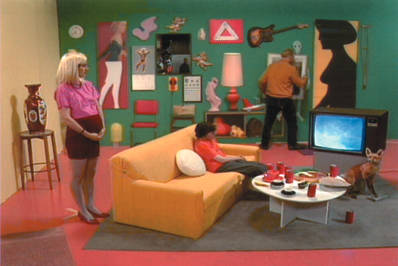
from Living Room by Michael Snow
Snow also screened See You Later/Au Revoir, and The Living Room, the latter notable for using digital effects now common in many
I’ll leave Franklin to describe the Tony Conrad films; aside from the footage of a young Mike Kelley yelling like Jerry Lewis in the army, and the hypnotic criss-crossings of Straight and Narrow, his films did nothing for me. Conrad did have a few good quotes, though. I wish I had copied them down, but paraphrasing: film is the space between nothing happening and something happening (suitable for a structuralist, I’d say); and later, describing how most artists he knew in New York City during the 1960s didn’t have jobs, or were ideologically against the idea of having jobs: we managed to survive by floating along on society’s economic froth.
Thursday, April 07, 2005
An unceremoniuos return, then. Here's an interesting video of a biomimetic robot currently in construction (construction: is that the right word for robots?) at NASA.
Biomimetic Robot
I was pleased and rather shocked to learn that NASA scientists know who Paul McCarthy is.
Somewhat related, Charlotte Street on plastic beings.
Biomimetic Robot
I was pleased and rather shocked to learn that NASA scientists know who Paul McCarthy is.
Somewhat related, Charlotte Street on plastic beings.
Friday, March 11, 2005
Friday, February 04, 2005
Countless other bloggers have already linked to this, but I think it's worth linking to one more time. A concise and damning history of the Iraq War reminiscent of Joe Brainard's I Remember.
What I Heard About Iraq by Eliot Weinberger
What I Heard About Iraq by Eliot Weinberger
Thursday, January 27, 2005
The Sontag: Feminist Hair Wear

A new multiple by Paige Gratland (1" clip-on grey hair extension) in commemoration of the late great Susan Sontag

A new multiple by Paige Gratland (1" clip-on grey hair extension) in commemoration of the late great Susan Sontag
Wednesday, January 19, 2005

still from Star Spangled to Death, Ken Jacobs
My year-end film list does not include “favorites”; it is not a top-ten (though I have limited it, by convention, to ten films in each category) and it is not a “best-of” list. I’m increasingly dissatisfied with simply liking certain films. Did I like that edited version of Elf I saw on the plane between
Newly Released Films
Twenty-Nine Palms (Bruno Dumont)
Woman is the Future of Man (Hong Sang-soo)
The 5 Obstructions (Lars von Trier & Jorgen Leth )
Notre musique (Jean-Luc Godard)
Dogville (Lars von Trier)
Bad Education (Pedro Almodóvar)
Blissfully Yours (Apichatpong Weerasethakul)
Star Spangled to Death (Ken Jacobs)
Tropical Malady (Apichatpong Weerasethakul)
Re-releases and Revivals
Playtime (Jacques Tati)
The
Tres tristes tigres (Raoul Ruiz)
Au hasard Balthazar (Robert Bresson)
I Vitelloni (Federico Fellini)
The Exiles (Kent MacKenzie)
Film About a Woman Who…(Yvonne Rainer)
Jeanne Dielman, 23 Quai du Commerce, 1080 Bruxelles (Chantal Akerman)
Sympathy for Mr. Vengeance (Park Chan-wook)
Bless Their Little Hearts (Billy Woodberry)
Notable
Distant (Nuri Bilge Ceylan)
Eternal Sunshine of the Spotless Mind (Michel Gondry)
Last Life in the Universe (Pen-Ek Ratanaruang)
The Return (Andrei Zvyagintsev)
Crimson Gold (Jafar Panahi)
Vera Drake (Mike Leigh)
Ten (Abbas Kiarostami)
Remembrance of Things to Come (Chris Marker & Yannick Bellon)
Moolaadé (Ousmane Sembene)
Henri Langlois: The Phantom of the Cinematheque (Jacques Richard)
Movies I Want to See ASAP
2046 (Wong Kar Wai)
Café Lumiere (Hou Hsiao-hsien)
Cinévardaphoto (Agnès Varda)
The Holy Girl (Lucrecia Martel)
L’Intrus (Claire Denis)
Trilogy: The Weeping Meadow (Theo Angelopoulos)
The World (Jia Zhang Ke)
Old Boy (Park Chan-wook)
Kings and Queen (Arnaud Desplechin)
Clean (Olivier Assayas)
A Hole in My Heart (Lukas Moodysson)
Monday, January 10, 2005

Salomon Huerta, Untitled Head (2002)
The New Chicano Movement by Josh Kun
(excerpt)
"I don't think I make Chicano art," says [artist Mario Ybarra, Jr.], standing in Slanguage's backroom, which is cluttered with Mac computers, crates of records, an Osama bin Laden piñata and a spray-painted portrait of reggae singer Jimmy Cliff. "It's something I have learned as a history and acquired as a filter. But right now, I don't think I could say I'm making it. It's like saying I make abstract expressionist painting. I'm not an ab-ex painter. I can't go back and make that art. I make contemporary art that is filtered from a Mexican American experience in Los Angeles."
Ybarra thinks of it as the Edward James Olmos theory of Chicano art. He wants to be less like the actor in "American Me" and "Zoot Suit"—in which Olmos was prison tough and pachuco savvy—and more like Olmos' character in "Blade Runner." In the film's dystopian 2029 L.A. future, Olmos is Gaff—a digital urban polyglot, a Chinese Chicano detective who speaks a street patois of English, Spanish, French, Chinese, Hungarian and German.
"My main drive," says Ybarra, "is not to learn Nahuatl, but to learn Mandarin or Cantonese."

Mario Ybarra, Jr., Go Tell It, 2004
Wednesday, January 05, 2005

David Thorne, Be Happy
image courtesy Clockshop
Projects off-line have barred my expansiveness on-line. Here’s a New Year’s resolution to improve my bloggy rigor and vigor. In the meantime, those living in Los Angeles can hear what I’ve been up to this Saturday night at the galleries at 6150 Wilshire. I’ll be reading from an essay I co-wrote with Rita Gonzalez that will be included in an artist’s monograph. Read more about the project below.
Image Control: Billboard Oases
Clockshop.org
Clockshop hosts a closing event at 6150 Wilshire Blvd., Saturday, January 8, from 6 to 8 p.m., to coincide with the publication of a limited-edition book about the project. For information, call (323) 666-2599.
Tuesday, December 21, 2004
Thursday, December 16, 2004

Friday, December 03, 2004
This video of Encore by DJ Dangermouse (off the Grey Album) is really worth the download. Ringo on the turntable! John breakdancing!
Wednesday, December 01, 2004
A friend at work points me to this impending piece of insipid legislation in Alabama:
Gay Book Ban Goal of State Lawmaker
(registration required)
An Alabama lawmaker who sought to ban gay marriages now wants to ban novels with gay characters from public libraries, including university libraries.
A bill by Rep. Gerald Allen, R-Cottondale, would prohibit the use of public funds for "the purchase of textbooks or library materials that recognize or promote homosexuality as an acceptable lifestyle." Allen said he filed the bill to protect children from the "homosexual agenda."
"Our culture, how we know it today, is under attack from every angle," Allen said in a press conference Tuesday.
Allen said that if his bill passes, novels with gay protagonists and college textbooks that suggest homosexuality is natural would have to be removed from library shelves and destroyed.
I should point out that such a law would make illegal the works of Plato, Petronius, Marcel Proust, Andre Gide, Thomas Mann, Gertrude Stein, Virginia Wolfe, Oscar Wilde, Tennessee Williams, Evelyn Waugh, Herman Melville, Jean Genet, E.M. Forster, James Baldwin, Alice Walker, ad infinitum.
***
As promised, here is a link to the full text version of Slavoj Zizek's Somewhere Over the Rainbow. (via Charlotte Street).
Gay Book Ban Goal of State Lawmaker
(registration required)
An Alabama lawmaker who sought to ban gay marriages now wants to ban novels with gay characters from public libraries, including university libraries.
A bill by Rep. Gerald Allen, R-Cottondale, would prohibit the use of public funds for "the purchase of textbooks or library materials that recognize or promote homosexuality as an acceptable lifestyle." Allen said he filed the bill to protect children from the "homosexual agenda."
"Our culture, how we know it today, is under attack from every angle," Allen said in a press conference Tuesday.
Allen said that if his bill passes, novels with gay protagonists and college textbooks that suggest homosexuality is natural would have to be removed from library shelves and destroyed.
I should point out that such a law would make illegal the works of Plato, Petronius, Marcel Proust, Andre Gide, Thomas Mann, Gertrude Stein, Virginia Wolfe, Oscar Wilde, Tennessee Williams, Evelyn Waugh, Herman Melville, Jean Genet, E.M. Forster, James Baldwin, Alice Walker, ad infinitum.
***
As promised, here is a link to the full text version of Slavoj Zizek's Somewhere Over the Rainbow. (via Charlotte Street).
Thursday, November 04, 2004
Wednesday, November 03, 2004
Tuesday, November 02, 2004
Wednesday, October 13, 2004
If you're so inclined, sign the letter of protest being sent to the New York Times in objection to the paper's insensitive obituary for Jacques Derrida. A similarly dismissive tone was used by the paper last year for its Edward Said obituary.
Monday, September 20, 2004
Laziness, and a brutal case of the bookworm, prevented me from attending Morgan Fisher’s new film ( ), described in the Film Forum Los Angeles catalog as “a rigorously constructed homage to the unsung building block of narrative film language known as the insert shot.” Ah, the insert shot; according to cybercollege.com, “a close-up of something that exists within the basic scene,” as below.


Don’t know what film these stills were taken from, but they convey the idea. I can only imagine Morgan managed to conjure up something magnificent. Hope it screens again sometime. Also showing was Thom “Los Angeles Plays Itself” Andersen’s --- ------- aka Short Line, Long Line (the first film in the wordless title meme?) which I caught last year, and which parodies rock and roll of the 1966 variety, as well as Eisenstein’s dialectical film montage, if you can believe that. It’s been awhile, but I recall a highly structured film: short shots of various rockers, jazzmen, and 60s scenarios, followed by long shots of the same, growing in length up to the apogee, then turning heel, shortening in length to the end of the whole shebang. But anyway: I did manage to see, Thursday last, a three-and-a-half hour documentary on Henri Langlois, that phantom of the cinematheque, entitled Henri Langlois, the Phantom of the Cinematheque. I was aware of but not versed in Langlois’ essential role in preserving film prints throughout the war (storing canisters in bath tubs and transporting them in baby carriages to hide them from the Nazis) and on through the 1970s. The documentary makes the case for Langlois as a “poet of the archive” who screened films thematically, often intuitively, sometimes strategically. Langlois recalls trading away a Theda Berra film very early in his career, assuming it was meaningless fluff, and not realizing the treasure he briefly held. The Langlois Lesson: hold on to it all, you can never foresee the vagaries of critical reception. I concur hesitantly, if only because I’m suspicious of the nostalgia so many from my generation feel for vintage television commercials (Schoolhouse Rocks, say, or Hey Mikey, He Likes It), nostalgia which often consigns (false) value to such cultural ephemera.


Don’t know what film these stills were taken from, but they convey the idea. I can only imagine Morgan managed to conjure up something magnificent. Hope it screens again sometime. Also showing was Thom “Los Angeles Plays Itself” Andersen’s --- ------- aka Short Line, Long Line (the first film in the wordless title meme?) which I caught last year, and which parodies rock and roll of the 1966 variety, as well as Eisenstein’s dialectical film montage, if you can believe that. It’s been awhile, but I recall a highly structured film: short shots of various rockers, jazzmen, and 60s scenarios, followed by long shots of the same, growing in length up to the apogee, then turning heel, shortening in length to the end of the whole shebang. But anyway: I did manage to see, Thursday last, a three-and-a-half hour documentary on Henri Langlois, that phantom of the cinematheque, entitled Henri Langlois, the Phantom of the Cinematheque. I was aware of but not versed in Langlois’ essential role in preserving film prints throughout the war (storing canisters in bath tubs and transporting them in baby carriages to hide them from the Nazis) and on through the 1970s. The documentary makes the case for Langlois as a “poet of the archive” who screened films thematically, often intuitively, sometimes strategically. Langlois recalls trading away a Theda Berra film very early in his career, assuming it was meaningless fluff, and not realizing the treasure he briefly held. The Langlois Lesson: hold on to it all, you can never foresee the vagaries of critical reception. I concur hesitantly, if only because I’m suspicious of the nostalgia so many from my generation feel for vintage television commercials (Schoolhouse Rocks, say, or Hey Mikey, He Likes It), nostalgia which often consigns (false) value to such cultural ephemera.
Thursday, September 16, 2004
Bernadette Corporation, Get Rid of Yourself, 2002, still from a color digital video, 70 minutes, via Artforum.com
Reading:
Bennett Simpson, Techniques of Today. Artforum, September 2004. It is the summer of 2001, and the New York– and Paris-based collective known as Bernadette Corporation has temporarily merged with Le Parti Imaginaire, a faction of post-Situationist militants and intellectuals with links to the burgeoning antiglobalization movement. The two groups have their own distinct practices and motivations, but, for the moment, they are united by the idea of making a film, which is to be set in the seaside Italian city of Genoa, amid the protests and stultifying inconclusiveness that will engulf the G8 Summit that July. The film resists knowing what it is or wants to be. And so its makers improvise, exploring what they call the "potential of community based on a radical refusal of political identity." More on Le Parti Imaginaire (in French) and the Bernadette Corporation.
Chris Kraus, Video Green: Los Angeles Art and the Triumph of Nothingness. Semiotext(e), 2004. Art and commerce have always been two sides of the same coin and to oppose them would be false. Instead, I am talking about a shift that has taken place during the past ten years in how art objects reach the market, how they are defined and how we read them. The professionalization of art production – congruent with specialization in other post-capitalist industries – has meant that the only art that will ever reach the market now is art that is produced by graduates of art schools. The life of the artist matters very little. What life? The lives of successful younger artists are practically identical.
(note bene: I believe this is changing, slowly. For successful non-MFA artists based in Los Angeles see Animal Charm and Miranda July – though it’s debatable whether these artists are “marketable” or not).
Péter Esterházy, The Glance of Countess Hahn-Hahn (down the Danube). Northwestern University Press, 1999. I once had this mysterious, distant uncle, whom everyone simply called Roberto, as if he were some Italian gigolo. Everyone, that is, except my father, who didn’t call him anything at all: the man’s name ‘never so much as passed his lips’. He wasn’t a blood relation. It was as the husband of a kind of aunt that he briefly became part of the family, joining it at precisely the point where the two sides, maternal and paternal, playfully and fatefully joined hands. A river is always the same river, however many arms it has. More on Péter Esterházy.
Received:
Black Spring, Winter 2004.
The Poker, issues 1,2,3 & 4.
Update: Paris’s new slant on Underground movies. A group calling itself La Mexicaine de la Perforation has claimed responsibility for the secret subterranean cinema in the catacombs of Paris, mentioned below. To be fair, until recently very few people did have a clue about La Mexicaine de la Perforation, a clandestine cell of "urban explorers" which claims its mission is to "reclaim and transform disused city spaces for the creation of zones of expression for free and independent art".
Wednesday, September 08, 2004
I'm home sick today, but, through bouts of phlegmish coughing, managed to stumble upon this fascinating story in the Guardian. In a secret Paris cavern the real underground cinema.
Police in Paris have discovered a fully equipped cinema-cum-restaurant in a large and previously uncharted cavern underneath the capital's chic 16th arrondissement. [...] After entering the network through a drain next to the Trocadero, the officers came across a tarpaulin marked: Building site, No access. Behind that, a tunnel held a desk and a closed-circuit TV camera set to automatically record images of anyone passing. The mechanism also triggered a tape of dogs barking, "clearly designed to frighten people off," the spokesman said. Further along, the tunnel opened into a vast 400 sq metre cave some 18m underground, "like an underground amphitheatre, with terraces cut into the rock and chairs". There the police found a full-sized cinema screen, projection equipment, and tapes of a wide variety of films, including 1950s film noir classics and more recent thrillers. None of the films were banned or even offensive, the spokesman said. A smaller cave next door had been turned into an informal restaurant and bar. "There were bottles of whisky and other spirits behind a bar, tables and chairs, a pressure-cooker for making couscous," the spokesman said. [...] Three days later, when the police returned accompanied by experts from the French electricity board to see where the power was coming from, the phone and electricity lines had been cut and a note was lying in the middle of the floor: "Do not," it said, "try to find us."
No word on whether or not they had The Phantom of Liberty (or Phantom of the Paradise) in stock. Link via greg.org via BoingBoing via DMD (amazing how these stories spread).
Police in Paris have discovered a fully equipped cinema-cum-restaurant in a large and previously uncharted cavern underneath the capital's chic 16th arrondissement. [...] After entering the network through a drain next to the Trocadero, the officers came across a tarpaulin marked: Building site, No access. Behind that, a tunnel held a desk and a closed-circuit TV camera set to automatically record images of anyone passing. The mechanism also triggered a tape of dogs barking, "clearly designed to frighten people off," the spokesman said. Further along, the tunnel opened into a vast 400 sq metre cave some 18m underground, "like an underground amphitheatre, with terraces cut into the rock and chairs". There the police found a full-sized cinema screen, projection equipment, and tapes of a wide variety of films, including 1950s film noir classics and more recent thrillers. None of the films were banned or even offensive, the spokesman said. A smaller cave next door had been turned into an informal restaurant and bar. "There were bottles of whisky and other spirits behind a bar, tables and chairs, a pressure-cooker for making couscous," the spokesman said. [...] Three days later, when the police returned accompanied by experts from the French electricity board to see where the power was coming from, the phone and electricity lines had been cut and a note was lying in the middle of the floor: "Do not," it said, "try to find us."
No word on whether or not they had The Phantom of Liberty (or Phantom of the Paradise) in stock. Link via greg.org via BoingBoing via DMD (amazing how these stories spread).
Tuesday, September 07, 2004
While thousands of Russians gathered today near Red Square to mourn their children killed at Beslan, the U.S. military lost its 1,000th soldier in the war in Iraq. An unknown number of Iraqis have died. According to Aljazeera, the Iraqi city of Falluja was under heavy artillery fire today by U.S. forces, sending families fleeing and causing civilian casualties. Former President Clinton was recovering from heart surgery, the 10-year U.S. deficit was expected to approach $2.3 trillion, and President Bush said: "Too many good docs are getting out of business. Too many OB/GYNs aren’t able to practice their love with women all across this country."
Friday, August 27, 2004


Thursday, August 26, 2004
An article in the LA Weekly, Zealots on Parade, about the protest I mentioned on August 12, gives equal time to the substantial cadre of Bushies in attendance.
Facing north, it was Bush people to the right, anti-Bushes to the left. The veritable standoff had Genevieve Peters beaming. The 41-year-old teacher and Beverly Hills resident founded L.A. for Bush. “It started out with eight people around a table, and it’s grown to hundreds — hundreds and hundreds,” said Peters. Democrats, she explained, “stand for hate and for vengeance and a globalization that has no strength or character or anything that’s for America. America, from the beginning of time, had an identity and culture. And they’re trying to decimate our identity and culture . . . to some melting pot like Europe.”
She added, “Democrats have gone in and said, ‘We’re just all one. Every culture has a place here.’ No! We’re an American culture.”
I didn't detect this sort of anger among the Bushies in attendance , but then again, I didn't talk to any of them. They were grinning like Cheshire cats.
Facing north, it was Bush people to the right, anti-Bushes to the left. The veritable standoff had Genevieve Peters beaming. The 41-year-old teacher and Beverly Hills resident founded L.A. for Bush. “It started out with eight people around a table, and it’s grown to hundreds — hundreds and hundreds,” said Peters. Democrats, she explained, “stand for hate and for vengeance and a globalization that has no strength or character or anything that’s for America. America, from the beginning of time, had an identity and culture. And they’re trying to decimate our identity and culture . . . to some melting pot like Europe.”
She added, “Democrats have gone in and said, ‘We’re just all one. Every culture has a place here.’ No! We’re an American culture.”
I didn't detect this sort of anger among the Bushies in attendance , but then again, I didn't talk to any of them. They were grinning like Cheshire cats.
Wednesday, August 18, 2004
Iraq's (only?) heavy metal band, Acrassicauda (Latin for Black Scorpion) has a little trouble getting gigs.
Check out the trailer for Wes Anderson's new film, The Life Aquatic with Steve Zissou, starring Bill Murray.
Thursday, August 12, 2004
Just returned from a huge protest RIGHT NOW outside of my office building. Bush is landing at the Santa Monica Airport right across the street in about an hour. . . several thousand people lining the streets, mostly Kerry supporters and other leftists but some pro-Bush. Some signs: LGBT Equality Now, Billionaires for Bush (in full tuxedos n' top-hats), Palestine Will Be Free: Support the Right of Return, Pink Slip Bush, a drawing of Schwarzenegger squeezing Kerry and yelling "Girlie Man!", Fire the Liar, Occupation Is Not Liberation, Bush: A Weapon of Mass Deception, Free Iran: Bring Back the Shah, Bush Lying Troops Dying, and my favorite, Nuke the Whales for Jesus. A group of teenage anarchists yelling, "No Bush, No Kerry, Revolution is Necessary." This morning I saw Kerry's motorcade pass us going the opposite direction on the freeway (he's speaking at Cal State Dominguez Hills). At least 50 motorcycle and other-vehicled cops, several dark-windowed cars, unmarked vans. They pretty much had the north-bound traffic at a stand-still. Things are revvin' up.
Tuesday, August 10, 2004

Malevich's Black Square
About a year ago, I made a brief, wry comment concerning the immanent demise of both the social-networking site Friendster.com and the then-popular flash mob trend. I thought the enthusiasm my friends felt for these phenomena was naïve (“revolutionary” was the word most commonly used to describe both trends), and that, given time, we would throw them into the same embarrassing, slightly campy trash bin now reserved for Hands Across America and We Are the World (despite the noble aims of both 80s events – food for the homeless and aid for Africa, respectively – they left a legacy of horrible pop music. Additionally, they traded on the idea of chic activism: we’re holding hands for the homeless, don’t you want to join? Then you can go back home; help Africa, buy this record. Activism as consumption, see John Powers: “Take Michael Moore, for example. Back when he made Bowling for Columbine, one of the weird things was to watch the audience cheer at the end as though they had done something. All they had done was to choose to go see Michael Moore sort-of do something. That is activism as consumption.”). Once you’re connected to one million people through 85 friends on a network that asks you to list your favorite items of cultural consumption, then what? Once you’ve made silly gestures at the Macy’s shoe department with 100 other clued-in people, then what? Now the LA Weekly profiles Friendster and flash-mobs together. In Make New Friends…but beware of Fakesters, Scott Lamb chronicles the fall of Friendster:
I signed up out of curiosity — Dubin was very enthusiastic about the site, but couldn’t really explain what she did with it. At first I did exactly what you’re supposed to do: invite other friends, look for high school classmates, fret over the wording of my profile, and take awkward digital self-portraits in the bathroom mirror. I exchanged messages with people I haven’t spoken to in years, which was both pleasant and awkward. When I ran out of people to look up, I invented profiles for my favorite GI Joe characters (who remain far more popular than I, and have far more interesting profiles).
And then, like a summer fling, it was over. I pretty much stopped using the site after a few months, unsure of what I was supposed to be doing there.
Same here. Exciting: having all your friends (and friends of friends) connected to each other in one virtual space. Frustrating: perpetual potential. It was difficult to find any real use for so many connections. Lamb concludes, “If it’s true that we go online looking for connections that we haven’t made in real life, perhaps the connections themselves can’t bear up under all that weight. Meanings come from relationships, not just connectivity, and Friendster can’t just give you a meaningful relationship.”
Then Alec Hanley Bemis interviews the inventor of flash mobs (“Friendster writ large”) in My Name is Bill…A Q&A with the anonymous founder of flash mobs. “Bill” sees flash mob predecessors in Situationism, Reclaim the Streets, Chengwin, the Madagascar Society, S-A-N-T-A-R-C-H-Y, Spencer Tunick, and Stanley Milgram. Some of his thought is a bit contradictory (“You didn’t have to feel like you were cool. It got a lot of people to do something that was a little punk, and a little oppositional, just because they thought it was a clever idea and they wanted to see what would happen,” and “The events I did in New York had an undercurrent of poking fun at everyone for being such a herd. Most of them had some dimension of obeisance or self-congratulation…The participants would feel that they were cool just for participating”) but it’s interesting to see how “Bill” re-theorizes the project as it evolves. What started as something “a little oppositional”, a “performance project” and a “prank”, turns into a “compelling idea” about “disrupting the flow of people in a city.”
I’ll be honest. When I started I really saw it as a gag that had an artistic dimension at the end. I expressly tried to make the mobs absurd and apolitical — in part because I wanted them to be fun, in part because I didn’t want anyone to see them as disrespectful of protest, or as parody. What I didn’t expect was how many people would see the mobs as political statements…And the more I did them, the more I realized the mobs actually did have a deeply political value. The nature of public space in America today has changed. It’s shopping malls, large chain stores, that kind of thing. The presumption is that you’re going to purchase something, but once you try to express yourself in any other way, suddenly you’re trespassing…At first, I denied any political interpretations, but eventually I became won over to the political power of my own project.
Elsewhere, Slavoj Zizek describes flash-mobs as protest reduced to minimalism:
Is not the ‘postmodern’ politics of resistance precisely permeated with aesthetic phenomena, from body-piercing and cross-dressing to public spectacles? Does not the curious phenomena of ‘flash mobs’ represent aesthetico-political protest at its purest, reduced to its minimal frame? In flash mobs, people show up at an assigned place at a certain time, perform some brief (and usually trivial or ridiculous) acts, and then disperse again – no wonder flash mobs are described as urban poetry with no real purpose. Are these flash mobs not a kind of ‘Malevich of politics’, the political counterpart to the famous ‘black square on white background’, the act of marking a minimal difference? (Zizek, pg. 124, Iraq: The Borrowed Kettle)
“Bill” also speaks of the “non-existent” center inherent to flash-mobs: “For example, in the third mob, we lined the banister of this hotel and stared down into the lobby for five minutes. Two hundred people lined this huge, city block-sized balcony, and after five minutes we just applauded. The idea being it was just this crowd of people, but at the center of it was a vacancy.” Doesn’t this image strangely recall the Malevich painting, with the black square as the the non-existent, vacant center of the hotel lobby?
Well, I’m thinking out loud, still sorting out the clues. Question: how does the “non-existent center” relate to Zizek’s “minimal difference”? (Also recall Zizek’s “absent center of political ontology”).
Monday, August 02, 2004
Reading Kevin Killian's wonderful account of the Orono Poetry Conference, I was struck by this passage:
At this point in my notes, which I transcribed from notes I wrote on my jeans, I see that Wallace Stevens somewhere said, "In the face of an overwhelming actuality, consciousness takes the place of the imagination." Was this something J. Hillis Miller shared with me? Or was it someone in the audience at my panel? I wrote the word AIDS next to the quote, thinking, what? That this was the overwhelming actuality that had occurred in my lifetime. Had consciousness then taken the place of the imagination, I can't decide. Sometimes I think yes, sometimes no.
Struck, because only a few hours previously I had coincidentally read the quote Killian kicks around, and it's deucedly different. It appears in Opus Posthumous, a short essay called "Poetry and War":
The immense poetry of war and the poetry of a work of the imagination are two different things. In the presence of the violent reality of war, consciousness takes the place of imagination. And consciousness of an immense war is a consciousness of a fact. If that is true, it follows that the poetry of war as a consciousness of the victories and defeats of nations, is a consciousness of fact. If that is true, it follows that the poetry of war as a consciousness of fact, but of heroic fact, of fact on such a scale that the mere consciousness of it affects the scale of one's thinking and constitutes a participating in the heroic.
It has been easy to say in recent times that everything tends to become real, or, rather, that everything moves in the direction of reality, that is to say, in the direction of fact. We leave fact and come back to it, come back to what we wanted fact to be, not to what it was, not to what it has too often remained. The poetry of a work of the imagination constantly illuminates the fundamental and endless struggle with fact. It goes on everywhere, even in the periods that we call peace. But in war, the desire to move in the direction of fact as we want it to be and to move quickly is overwhelming.
Nothing will ever appease this desire except a consciousness of fact as everyone is at least satisfied to have it be.
(emphasis mine)
Now it may be true that violent reality is an overwhelming actuality, but I find it interesting that Killian would misremember (or mishear, or perhaps it was misreported to him by J. Hillis Miller) the particularity of "the violent reality of war" for the more general (and less threatening sounding) "overwhelming actuality", while "war" goes missing from the quotation altogether, replaced by AIDS, which of course is a different kind of violent reality. But is this the imagination at work?
At this point in my notes, which I transcribed from notes I wrote on my jeans, I see that Wallace Stevens somewhere said, "In the face of an overwhelming actuality, consciousness takes the place of the imagination." Was this something J. Hillis Miller shared with me? Or was it someone in the audience at my panel? I wrote the word AIDS next to the quote, thinking, what? That this was the overwhelming actuality that had occurred in my lifetime. Had consciousness then taken the place of the imagination, I can't decide. Sometimes I think yes, sometimes no.
Struck, because only a few hours previously I had coincidentally read the quote Killian kicks around, and it's deucedly different. It appears in Opus Posthumous, a short essay called "Poetry and War":
The immense poetry of war and the poetry of a work of the imagination are two different things. In the presence of the violent reality of war, consciousness takes the place of imagination. And consciousness of an immense war is a consciousness of a fact. If that is true, it follows that the poetry of war as a consciousness of the victories and defeats of nations, is a consciousness of fact. If that is true, it follows that the poetry of war as a consciousness of fact, but of heroic fact, of fact on such a scale that the mere consciousness of it affects the scale of one's thinking and constitutes a participating in the heroic.
It has been easy to say in recent times that everything tends to become real, or, rather, that everything moves in the direction of reality, that is to say, in the direction of fact. We leave fact and come back to it, come back to what we wanted fact to be, not to what it was, not to what it has too often remained. The poetry of a work of the imagination constantly illuminates the fundamental and endless struggle with fact. It goes on everywhere, even in the periods that we call peace. But in war, the desire to move in the direction of fact as we want it to be and to move quickly is overwhelming.
Nothing will ever appease this desire except a consciousness of fact as everyone is at least satisfied to have it be.
(emphasis mine)
Now it may be true that violent reality is an overwhelming actuality, but I find it interesting that Killian would misremember (or mishear, or perhaps it was misreported to him by J. Hillis Miller) the particularity of "the violent reality of war" for the more general (and less threatening sounding) "overwhelming actuality", while "war" goes missing from the quotation altogether, replaced by AIDS, which of course is a different kind of violent reality. But is this the imagination at work?
Tuesday, July 27, 2004
Friday, July 23, 2004
An art professor friend of mine is teaching a course on "The Eighties" next quarter and wants to include at least five films. Blade Runner is out because it's over-taught already and apparantly today's college freshmen find it incredibly boring (it lacks any Will Smith-style fistfighting, and most kids don't get the noir references). Derek Jarman's Jubilee is a possibility, but it seems more late 70s than full-on 80s in its references. I suggested that if he really wanted to show an 80s film, he should go with something like Rambo or Top Gun, but he really wants to stick to "paranoiac" 80s films. So with the "paranoiac" in mind we came up with
- Repo Man
- Videodrome
- Blue Velvet
Several new albums that I’d like to share with you:
- The Fiery Furnaces, Blueberry Boat. From what I can tell the songs on this album are an extended riff on the Who’s A Quick One While He’s Away, The Kinks’ Village Green Preservation Society, psychedelic singer-songwriting, & the Carpenters. Brother-Sister duo sound nothing like the Hype Strypes. Haven’t heard the first album, hear it’s more bluesy.
- Devendra Banhart, Rejoicing in the Hands. A unique voice that requires getting used to, somewhere between Bert Jansch and Billie Holliday. Songs for folk folk.
- Animal Collective, Tung Songs. The most interesting avant-rock I’ve heard this year. Campfire sing-alongs, beach bum melodies, Julio-down-by-the-schoolyard ethnographies.
- Deerhoof, Milk Man. The latest in a long line of micro-masterpieces. Precision pop-a-wheelies.
- Bill Fay, From the Bottom of an Old Grandfather Clock. I heard this in a store in Manhattan and felt compelled to order this import-only record, made in the early 70s. British folk-psychedelia with the Beatles looking over his shoulder. Shouldn’t be good but is.
- Madvillain, Madvillainy. MF Doom and Madlib doin' it. As my friend Angelica says, “hip-hop for grownups.” S/FJ nails it at the New Yorker, Doom’s Day.
- Azita, Life on the Fly. An uncanny homage to Steely Dan from the former Scissor Girl. Listen to the track on her website and tell me she's not a Donald Fagen follower.
Wednesday, July 21, 2004
There's a great used bookstore near the NuArt Theatre and Cinefile video store in West Los Angeles called Alias which stays open until 11 o’clock every night, a rarity in these parts. I always find something interesting or useful there, the prices are reasonable, and the Scandinavian brothers who run the place are great conversationalists. Recently I’ve been scouring the city for old literary journals (which are not so easy to find; those that read journals don’t often part with them and many used booksellers refuse to buy them) so I was pleased to find a few at Alias last week.
Caterpillar # 12 from July 1970, edited by Clayton Eshleman with a great cover collage by Robin Blaser. Contributors are Robin Blaser, Jack Spicer, and Stan Persky.
Barney #1 from 1981, edited by Jack Skelley with cover art by Eric Fisher. Billed “the Modern Stone Age Magazine” the premier issue has contributions from Bob Flanagan, Dennis Cooper, Elaine Equi, Jerome Sala, Benjamin Weissman, Amy Gerstler, Ron Padgett, Michael Silverblatt and others with whom I’m less familiar.
Transition Forty-Eight #1 from January 1948 edited by Georges Duthuit. The object of this journal, according to the editorial statement, is to “assemble for the English-speaking world the best of French art and thought, whatever the style and whatever the application.” The contributors to this issue include Jean-Paul Sartre, Rene Char, Antonin Artaud, and Georges Bataille. The issue begins with rambling post-Surrealist essay by Duthuit called “Sartre’s Last Class”, which begins, “A duel between men of letters, the last perhaps, for we are being watched, gentlemen, and not indulgently!"
Also picked up a Signature anthology of mostly UK writing which includes Samuel Beckett, Eva Figes, Aiden Higgens, and Eugene Ionesco, as well as Donald Barthelme's The Dead Father.
Caterpillar # 12 from July 1970, edited by Clayton Eshleman with a great cover collage by Robin Blaser. Contributors are Robin Blaser, Jack Spicer, and Stan Persky.
Barney #1 from 1981, edited by Jack Skelley with cover art by Eric Fisher. Billed “the Modern Stone Age Magazine” the premier issue has contributions from Bob Flanagan, Dennis Cooper, Elaine Equi, Jerome Sala, Benjamin Weissman, Amy Gerstler, Ron Padgett, Michael Silverblatt and others with whom I’m less familiar.
Transition Forty-Eight #1 from January 1948 edited by Georges Duthuit. The object of this journal, according to the editorial statement, is to “assemble for the English-speaking world the best of French art and thought, whatever the style and whatever the application.” The contributors to this issue include Jean-Paul Sartre, Rene Char, Antonin Artaud, and Georges Bataille. The issue begins with rambling post-Surrealist essay by Duthuit called “Sartre’s Last Class”, which begins, “A duel between men of letters, the last perhaps, for we are being watched, gentlemen, and not indulgently!"
Also picked up a Signature anthology of mostly UK writing which includes Samuel Beckett, Eva Figes, Aiden Higgens, and Eugene Ionesco, as well as Donald Barthelme's The Dead Father.
Monday, July 19, 2004
Distressing is one word I would use to describe The Corporation, a new documentary by Jennifer Abbot and Mark Achbar now in distribution. Other words would also begin with the dis prefix, and maybe the mis and mal prefixes as well. To my mind this film was much more effective than Fahrenheit 9/11 (although it’s probably an unfair comparison: Corporation is much broader in its critique than F 9/11, going after capitalism in general rather than Dubya in particular). It’s a meaty film, filled with all kinds of disgusting morsels and piggish maneuvers (for instance, Bechtel Corporation’s attempted privatization of water in Bolivia -- which would have made it illegal for villagers to collect even rain water -- and covert marketing campaigns). I didn’t learn anything new exactly, but the visual and rhetorical force of the film left me swooning. I kept an eye open for mention of any tech companies. Microsoft and Yahoo were mentioned in passing (“aggressive” was the term someone used for the Gates Machine), e-Bay's logo flashed on screen a few times, Xerox and Amazon came in for some ethical violations, there was a segment on the IBM-Nazi link, but there was absolutely no mention of Google. Which brought to mind Google’s motto: “Don’t Be Evil.” I know that many workers at Google take this phrase to heart (and now is the time I should mention I work at Google), but I wonder if it somehow operates as a marketing-tag in addition to a company goal. To what extent has Google successfully branded itself as a non-evil corporation? Can a company live up to its ideals if its ideals have become ad copy?
Thursday, July 15, 2004
My absence from the blogosphere (how I hate that word) is justifiable. Chalk it up to other priorities. I had meant this blog to be a live journal of various cultural events and artifacts, but events have come and gone and I regret my inattention. Herewith are a few things.
My recent visit to New York City provided an opportunity to catch a few exhibitions.

From Sue De Beer's Hans und Grete
The Whitney Biennial. Highlights included work by Ernesto Caivano (whose dream-birds mind-meld the fantasy art of Brian Froud), Sue de Beer (Dennis Cooper must love her), Robyn O’Neil (so lonesome), Chloe Piene, Aïda Ruilova (lifting Lung Leg), and Catherine Sullivan. Hmmm. Surveying this list, I see I have a lotta love for drawing and video. Well, harrumph! None of the painting really excited me; with the exception, perhaps, of Julie Mehretu, with whom I’m still wrestling. Her elephantitic canvases seem too slick on approach.
Singular Forms (Sometimes Repeated) at the Guggenheim. My first face-to-face with the Gug – Lloyd Wright seemed much more a presence than Rauschenberg, Judd, Ryman, et al. I prefer Judd out in Marfa and environs. Flavin always fells me, though. The most successful installations were those that were given room (and given rooms): Robert Irwin’s Varese Scrim, whose false wall truly astonished me, and Rachel Whiteread’s Untitled (One Hundred Spaces), the minimalist’s graveyard.
Open House: Working in Brooklyn at the Brooklyn Museum. Should have made some notes closer to seeing this one, it’s flown my noggin now. I was greatly disturbed by the evident militarization of New York; as we ascended from the subway at the Brooklyn Museum, a small army of policemen in swat gear and rifles-at-the-ready watched and smiled.
Closer to home, MOCA trots out A Minimal Future? Art As Object 1958-1968, while across town LACMA ones them up with Beyond Geometry: Experiments in Form 1940s-70s. Regarding Art As Object, I’d have to agree with Yve-Alain Bois, who writes in Art Forum, “Regrettably, the show offers not the tiniest bit of scenario. No chronology, no typology, no label explanations whatsoever, resulting in an exasperating feeling of pure randomness for anyone not already in the loop.” How was little old me to know that “the juxtaposition of the hideously decorative pastel-painted, canvas-covered beams by Judy Chicago with a series of Robert Smithson's jejune early geometric objects (in poor physical shape)” was chosen because they were “side by side at the famous ‘Primary Structures’ show of 1966”? Beyond Geometry is large and expansive, as its name suggests. Almost as great as the art was hearing random public reaction to it. “Disgusting!” cried a woman staring at a Judd box. Another, staring at the photo documentation of Eleanor Antin’s Carving: A Traditional Sculpture, which documents the artist’s gradual loss of weight: “Don’t bother looking at this one, honey. It’s just a naked girl repeated over and over, for no discernable purpose.” Lots of folks were there though. I’m taking my mom this weekend.
My recent visit to New York City provided an opportunity to catch a few exhibitions.

From Sue De Beer's Hans und Grete
The Whitney Biennial. Highlights included work by Ernesto Caivano (whose dream-birds mind-meld the fantasy art of Brian Froud), Sue de Beer (Dennis Cooper must love her), Robyn O’Neil (so lonesome), Chloe Piene, Aïda Ruilova (lifting Lung Leg), and Catherine Sullivan. Hmmm. Surveying this list, I see I have a lotta love for drawing and video. Well, harrumph! None of the painting really excited me; with the exception, perhaps, of Julie Mehretu, with whom I’m still wrestling. Her elephantitic canvases seem too slick on approach.
Singular Forms (Sometimes Repeated) at the Guggenheim. My first face-to-face with the Gug – Lloyd Wright seemed much more a presence than Rauschenberg, Judd, Ryman, et al. I prefer Judd out in Marfa and environs. Flavin always fells me, though. The most successful installations were those that were given room (and given rooms): Robert Irwin’s Varese Scrim, whose false wall truly astonished me, and Rachel Whiteread’s Untitled (One Hundred Spaces), the minimalist’s graveyard.
Open House: Working in Brooklyn at the Brooklyn Museum. Should have made some notes closer to seeing this one, it’s flown my noggin now. I was greatly disturbed by the evident militarization of New York; as we ascended from the subway at the Brooklyn Museum, a small army of policemen in swat gear and rifles-at-the-ready watched and smiled.
Closer to home, MOCA trots out A Minimal Future? Art As Object 1958-1968, while across town LACMA ones them up with Beyond Geometry: Experiments in Form 1940s-70s. Regarding Art As Object, I’d have to agree with Yve-Alain Bois, who writes in Art Forum, “Regrettably, the show offers not the tiniest bit of scenario. No chronology, no typology, no label explanations whatsoever, resulting in an exasperating feeling of pure randomness for anyone not already in the loop.” How was little old me to know that “the juxtaposition of the hideously decorative pastel-painted, canvas-covered beams by Judy Chicago with a series of Robert Smithson's jejune early geometric objects (in poor physical shape)” was chosen because they were “side by side at the famous ‘Primary Structures’ show of 1966”? Beyond Geometry is large and expansive, as its name suggests. Almost as great as the art was hearing random public reaction to it. “Disgusting!” cried a woman staring at a Judd box. Another, staring at the photo documentation of Eleanor Antin’s Carving: A Traditional Sculpture, which documents the artist’s gradual loss of weight: “Don’t bother looking at this one, honey. It’s just a naked girl repeated over and over, for no discernable purpose.” Lots of folks were there though. I’m taking my mom this weekend.
Wednesday, June 30, 2004
Anonymous posted this in a comment below. I think it is important enough to bring it up front. It turns out Steven Kurtz of the Critical Art Ensemble is being indicted.
Art Professor Indicted for Illegal Medium
By CAROLYN THOMPSON
The Associated Press
Tuesday, June 29, 2004; 6:08 PM
BUFFALO, N.Y. - An art professor whose use of biological materials made him the target of a federal terrorism investigation - which sparked an outcry in the world art community - was indicted Tuesday on charges he obtained the materials illegally.
Steven Kurtz, a University at Buffalo professor, was charged along with Robert Ferrell, chairman of the University of Pittsburgh's Human Genetics Department, in a four-count indictment returned by a federal grand jury seated earlier this month.
Prosecutors said Ferrell used his University at Pittsburgh account with a biological supply company to order potentially harmful organisms for Kurtz, which colleagues said Kurtz intended to use in an art project.
"The charges do not relate to bioterrorism," U.S. Attorney Michael Battle said. "Very simply, this is a case about fraud."
Kurtz is a founding member of the Critical Art Ensemble, which has used human DNA and other biological materials to draw attention to social issues, such as genetically altered foods.
As a private individual, Kurtz was not eligible to order the materials allegedly obtained for him by Ferrell, authorities said.
A call to Kurtz's attorney was not immediately returned.
Outraged by the investigation of Kurtz, artists and academics earlier this month held simultaneous rallies in Buffalo; Vienna, Austria; Amsterdam, Netherlands; and Berkeley, Calif.
A colleague of Kurtz's who was among several people subpoenaed to testify before the grand jury, called the indictment "a total joke."
"It sounds like they're trying to keep face because they overreacted and made fools of themselves," the colleague, speaking on condition of anonymity, said.
The investigation began in May after Kurtz called 911 to report the death of his wife, Hope, in their home. Firefighters who responded noticed the biological materials and notified Buffalo police, who then contacted the Joint Terrorism Task Force. The JTTF spent two days removing materials from the home.
The University at Buffalo, in a statement, said it would review the charges before considering any action, while stressing its commitment to the academic freedom of faculty members to pursue research.
As for Ferrell, "He is still a faculty member at the university and a distinguished scientist," spokesman Robert Hill said. "We do hope for a swift and positive outcome."
Both men face 20 years in prison if convicted.
Art Professor Indicted for Illegal Medium
By CAROLYN THOMPSON
The Associated Press
Tuesday, June 29, 2004; 6:08 PM
BUFFALO, N.Y. - An art professor whose use of biological materials made him the target of a federal terrorism investigation - which sparked an outcry in the world art community - was indicted Tuesday on charges he obtained the materials illegally.
Steven Kurtz, a University at Buffalo professor, was charged along with Robert Ferrell, chairman of the University of Pittsburgh's Human Genetics Department, in a four-count indictment returned by a federal grand jury seated earlier this month.
Prosecutors said Ferrell used his University at Pittsburgh account with a biological supply company to order potentially harmful organisms for Kurtz, which colleagues said Kurtz intended to use in an art project.
"The charges do not relate to bioterrorism," U.S. Attorney Michael Battle said. "Very simply, this is a case about fraud."
Kurtz is a founding member of the Critical Art Ensemble, which has used human DNA and other biological materials to draw attention to social issues, such as genetically altered foods.
As a private individual, Kurtz was not eligible to order the materials allegedly obtained for him by Ferrell, authorities said.
A call to Kurtz's attorney was not immediately returned.
Outraged by the investigation of Kurtz, artists and academics earlier this month held simultaneous rallies in Buffalo; Vienna, Austria; Amsterdam, Netherlands; and Berkeley, Calif.
A colleague of Kurtz's who was among several people subpoenaed to testify before the grand jury, called the indictment "a total joke."
"It sounds like they're trying to keep face because they overreacted and made fools of themselves," the colleague, speaking on condition of anonymity, said.
The investigation began in May after Kurtz called 911 to report the death of his wife, Hope, in their home. Firefighters who responded noticed the biological materials and notified Buffalo police, who then contacted the Joint Terrorism Task Force. The JTTF spent two days removing materials from the home.
The University at Buffalo, in a statement, said it would review the charges before considering any action, while stressing its commitment to the academic freedom of faculty members to pursue research.
As for Ferrell, "He is still a faculty member at the university and a distinguished scientist," spokesman Robert Hill said. "We do hope for a swift and positive outcome."
Both men face 20 years in prison if convicted.
Thursday, June 10, 2004
Monday, June 07, 2004
I've officially had it up to HERE with Ronald Reagan. His presidency may or may not have made our lives worse in all kinds of ways while he was still alive (I lean towards the former), but he's made my life very inconvenient with his death. I spent 45 minutes waiting in traffic on my way to work today while his presidential funeralcade made its way across an overpass on the 405 freeway. Los Angeles firemen, who should know better, lined the overpass in full view, fists in the air, and draped giant American flags from three-story-high extended fire-ladders, causing all the traffic on the freeway to slow to a crawl as motorists took a look. If car horns are any measure of approval, only the big-rigs seemed to enjoy this spectacle. The rest of us were left to curse this total waste of city resources. I want that 45 minutes of my life back, including reimbursement of the cost in wasted gasoline (which is now at $2.49 a gallon in Los Angeles).
UPDATE: Now is the time to remember J.G. Ballard's short story "Why I Want to Fuck Ronald Reagan".
Ronald Reagan and the conceptual auto disaster. Numerous studies have been conducted upon patients in terminal paresis (GPI), placing Reagan in a series of simulated auto crashes, e.g. multiple pileups, head-on collisions, motorcade attacks (fantasies of Presidential assassinations remained a continuing preoccupation, subject showing a marked polymorphic fixation on windshields and rear trunk assemblies). Powerful erotic fantasies of an anal-sadistic surrounded the image of the Presidential contender. Subjects were required to construct the optimum auto disaster victim by placing a replica of Reagan’s head on the unretouched photographs of crash fatalities.
In 82% of cases massive rear-end collisions were selected with a preference for expressed fecal matter and rectal hemorrhages. Further tests were conducted to define the optimum model-year. These indicate that a three year model lapse with child victims provide the maximum audience excitation (confirmed by manufacturers’ studies of the optimum auto disaster). It is hoped to construct a rectal modulous of Reagan and the auto disaster of maximized audience arousal.
Motion picture studies of Ronald Reagan reveal characteristic patterns of facial tones and musculature associated with homoerotic behavior. The continuing tension of buccal sphincters and the recessive tongue role tally with earlier studies of facial rigidity (cf., Adolf Hitler, Nixon). Slow-motion cine films of campaign speeches exercised a marked erotic effect upon an audience of spastic children. Even with mature adults the verbal material was found to have a minimal effect, as demonstrated by substitution of an edited tape giving diametrically opposed opinions...
Incidence of orgasms in fantasies of sexual intercourse with Ronald Reagan. Patients were provided with assembly kit photographs of sexual partners during intercourse. In each case Reagan’s face was super imposed upon the original partner. Vaginal intercourse with "Reagan" proved uniformly disappointing, producing orgasm in 2% of subjects. Axillary, buccal, navel, aural, and orbital modes produced proximal erections. The preferred mode of entry overwhelmingly proved to be the rectal. After a preliminary course in anatomy it was found that the caecum and transverse colon also provided excellent sites for excitation. In an extreme 12% of cases, the simulated anus of post-costolomy surgery generated spontaneous orgasm in 98% of penetrations. Multiple-track cine-films were constructed of "Reagan" in intercourse during (a) campaign speeches, (b) rear-end auto collisions with one and three year model changes, (c) with rear exhaust assemblies...
Sexual fantasies in connection with Ronald Reagan. The genitalia of the Presidential contender exercised a continuing fascination. A series of imaginary genitalia were constructed using (a) the mouth parts of Jacqueline Kennedy, (b) a Cadillac, (c) the assembly kid prepuce of President Johnson...In 89% of cases, the constructed genitalia generated a high incidence of self-induced orgasm. Tests indicate the masturbatory nature of the Presidential contender’s posture. Dolls consisting of plastic models of Reagan’s alternate genitalia were found to have a disturbing effect on deprived children.
Reagan’s hairstyle. Studies were conducted on the marked fascination exercised by the Presidential contender’s hairstyle. 65% of male subjects made positive connections between the hairstyle and their own pubic hair. A series of optimum hairstyles were constructed.
The conceptual role of Reagan. Fragments of Reagan’s cinetized postures were used in the construction of model psychodramas in which the Reagan-figure played the role of husband, doctor, insurance salesman, marriage counsellor, etc.
The failure of these roles to express any meaning reveals the nonfunctional character of Reagan. Reagan’s success therefore indicates society’s periodic need to re-conceptualize its political leaders. Reagan thus appears as a series of posture concepts, basic equations which reformulate the roles of aggression and anality. Reagan’s personality. The profound anality of the Presidential contender may be expected to dominate the United States in the coming years. By contrast the late JFK remained the prototype of the oral subject, usually conceived in pre-pubertal terms. In further studies sadistic psychopaths were given the task of devising sex fantasies involving Reagan. Results confirm the probability of Presidential figures being perceived primarily in genital terms; the face of LB Johnson is clearly genital in significant appearance--the nasal prepuce, scrotal jaw, etc. Faces were seen as either circumcised (JFK, Khrushchev) or uncircumcised (LBJ, Adenauer). In assembly-kit tests Reagan’s face was uniformly perceived as a penile erection. Patients were encouraged to devise the optimum sex-death of Ronald Reagan.
UPDATE II: Christopher Hitchens on Ronald Reagan.
Ronald Reagan claimed that the Russian language had no word for "freedom." (The word is "svoboda"; it's quite well attested in Russian literature.) Ronald Reagan said that intercontinental ballistic missiles (not that there are any non-ballistic missiles—a corruption of language that isn't his fault) could be recalled once launched. Ronald Reagan said that he sought a "Star Wars" defense only in order to share the technology with the tyrants of the U.S.S.R. Ronald Reagan professed to be annoyed when people called it "Star Wars," even though he had ended his speech on the subject with the lame quip, "May the force be with you." Ronald Reagan used to alarm his Soviet counterparts by saying that surely they'd both unite against an invasion from Mars. Ronald Reagan used to alarm other constituencies by speaking freely about the "End Times" foreshadowed in the Bible. In the Oval Office, Ronald Reagan told Yitzhak Shamir and Simon Wiesenthal, on two separate occasions, that he himself had assisted personally at the liberation of the Nazi death camps.
UPDATE: Now is the time to remember J.G. Ballard's short story "Why I Want to Fuck Ronald Reagan".
Ronald Reagan and the conceptual auto disaster. Numerous studies have been conducted upon patients in terminal paresis (GPI), placing Reagan in a series of simulated auto crashes, e.g. multiple pileups, head-on collisions, motorcade attacks (fantasies of Presidential assassinations remained a continuing preoccupation, subject showing a marked polymorphic fixation on windshields and rear trunk assemblies). Powerful erotic fantasies of an anal-sadistic surrounded the image of the Presidential contender. Subjects were required to construct the optimum auto disaster victim by placing a replica of Reagan’s head on the unretouched photographs of crash fatalities.
In 82% of cases massive rear-end collisions were selected with a preference for expressed fecal matter and rectal hemorrhages. Further tests were conducted to define the optimum model-year. These indicate that a three year model lapse with child victims provide the maximum audience excitation (confirmed by manufacturers’ studies of the optimum auto disaster). It is hoped to construct a rectal modulous of Reagan and the auto disaster of maximized audience arousal.
Motion picture studies of Ronald Reagan reveal characteristic patterns of facial tones and musculature associated with homoerotic behavior. The continuing tension of buccal sphincters and the recessive tongue role tally with earlier studies of facial rigidity (cf., Adolf Hitler, Nixon). Slow-motion cine films of campaign speeches exercised a marked erotic effect upon an audience of spastic children. Even with mature adults the verbal material was found to have a minimal effect, as demonstrated by substitution of an edited tape giving diametrically opposed opinions...
Incidence of orgasms in fantasies of sexual intercourse with Ronald Reagan. Patients were provided with assembly kit photographs of sexual partners during intercourse. In each case Reagan’s face was super imposed upon the original partner. Vaginal intercourse with "Reagan" proved uniformly disappointing, producing orgasm in 2% of subjects. Axillary, buccal, navel, aural, and orbital modes produced proximal erections. The preferred mode of entry overwhelmingly proved to be the rectal. After a preliminary course in anatomy it was found that the caecum and transverse colon also provided excellent sites for excitation. In an extreme 12% of cases, the simulated anus of post-costolomy surgery generated spontaneous orgasm in 98% of penetrations. Multiple-track cine-films were constructed of "Reagan" in intercourse during (a) campaign speeches, (b) rear-end auto collisions with one and three year model changes, (c) with rear exhaust assemblies...
Sexual fantasies in connection with Ronald Reagan. The genitalia of the Presidential contender exercised a continuing fascination. A series of imaginary genitalia were constructed using (a) the mouth parts of Jacqueline Kennedy, (b) a Cadillac, (c) the assembly kid prepuce of President Johnson...In 89% of cases, the constructed genitalia generated a high incidence of self-induced orgasm. Tests indicate the masturbatory nature of the Presidential contender’s posture. Dolls consisting of plastic models of Reagan’s alternate genitalia were found to have a disturbing effect on deprived children.
Reagan’s hairstyle. Studies were conducted on the marked fascination exercised by the Presidential contender’s hairstyle. 65% of male subjects made positive connections between the hairstyle and their own pubic hair. A series of optimum hairstyles were constructed.
The conceptual role of Reagan. Fragments of Reagan’s cinetized postures were used in the construction of model psychodramas in which the Reagan-figure played the role of husband, doctor, insurance salesman, marriage counsellor, etc.
The failure of these roles to express any meaning reveals the nonfunctional character of Reagan. Reagan’s success therefore indicates society’s periodic need to re-conceptualize its political leaders. Reagan thus appears as a series of posture concepts, basic equations which reformulate the roles of aggression and anality. Reagan’s personality. The profound anality of the Presidential contender may be expected to dominate the United States in the coming years. By contrast the late JFK remained the prototype of the oral subject, usually conceived in pre-pubertal terms. In further studies sadistic psychopaths were given the task of devising sex fantasies involving Reagan. Results confirm the probability of Presidential figures being perceived primarily in genital terms; the face of LB Johnson is clearly genital in significant appearance--the nasal prepuce, scrotal jaw, etc. Faces were seen as either circumcised (JFK, Khrushchev) or uncircumcised (LBJ, Adenauer). In assembly-kit tests Reagan’s face was uniformly perceived as a penile erection. Patients were encouraged to devise the optimum sex-death of Ronald Reagan.
UPDATE II: Christopher Hitchens on Ronald Reagan.
Ronald Reagan claimed that the Russian language had no word for "freedom." (The word is "svoboda"; it's quite well attested in Russian literature.) Ronald Reagan said that intercontinental ballistic missiles (not that there are any non-ballistic missiles—a corruption of language that isn't his fault) could be recalled once launched. Ronald Reagan said that he sought a "Star Wars" defense only in order to share the technology with the tyrants of the U.S.S.R. Ronald Reagan professed to be annoyed when people called it "Star Wars," even though he had ended his speech on the subject with the lame quip, "May the force be with you." Ronald Reagan used to alarm his Soviet counterparts by saying that surely they'd both unite against an invasion from Mars. Ronald Reagan used to alarm other constituencies by speaking freely about the "End Times" foreshadowed in the Bible. In the Oval Office, Ronald Reagan told Yitzhak Shamir and Simon Wiesenthal, on two separate occasions, that he himself had assisted personally at the liberation of the Nazi death camps.
Sunday, June 06, 2004
A scientist believes he has discovered the lost city of Atlantis in southern Spain.
Satellite photos of southern Spain reveal features on the ground appearing to match descriptions made by Greek scholar Plato of the fabled utopia.
Dr Rainer Kuehne thinks the "island" of Atlantis simply referred to a region of the southern Spanish coast destroyed by a flood between 800 BC and 500 BC.
Satellite photos of southern Spain reveal features on the ground appearing to match descriptions made by Greek scholar Plato of the fabled utopia.
Dr Rainer Kuehne thinks the "island" of Atlantis simply referred to a region of the southern Spanish coast destroyed by a flood between 800 BC and 500 BC.
Loyd Sigmon, inventor of the SigAlert traffic warning, has died. If you're not from Los Angeles, you might be wondering, "What's a SigAlert?" It's not quite a traffic jam: an unplanned lane blockage of at least half an hour.
Saturday, June 05, 2004
GrepLaw has posted some hilarious (and disturbing) political remixes of FOX News and US Army commercials.
Wednesday, May 26, 2004

Ubuweb has posted a copy of The Brakhage Lectures by Stan Brakhage. Lectures on George Méliès, David Wark Griffith, Carl Theodore Dreyer, and Sergei Eisenstein. Link via Free Space Comix.
Slavoj Zizek has a new essay up at In These Times. Typically, it recycles portions of his previous published essays to further extend his critique of the Bush Administration.
What Rumsfeld Doesn’t Know That He Knows About Abu Ghraib
Does anyone still remember the unfortunate Muhammed Saeed al-Sahaf? As Saddam’s information minister, he heroically would deny the most evident facts and stick to the Iraqi line. Even as U.S. tanks were hundreds of yards from his office, al-Sahaf continued to claim that the television shots of the tanks on Baghdad streets were Hollywood special effects. Once, however, he did strike a strange truth. When told that the U.S. military already controlled parts of Baghdad, he snapped back: “They are not in control of anything—they don’t even control themselves!” When the scandalous news broke about the weird things going on in Baghdad’s Abu Ghraib prison, we got a glimpse of this very dimension of themselves that Americans do not control.
What Rumsfeld Doesn’t Know That He Knows About Abu Ghraib
Does anyone still remember the unfortunate Muhammed Saeed al-Sahaf? As Saddam’s information minister, he heroically would deny the most evident facts and stick to the Iraqi line. Even as U.S. tanks were hundreds of yards from his office, al-Sahaf continued to claim that the television shots of the tanks on Baghdad streets were Hollywood special effects. Once, however, he did strike a strange truth. When told that the U.S. military already controlled parts of Baghdad, he snapped back: “They are not in control of anything—they don’t even control themselves!” When the scandalous news broke about the weird things going on in Baghdad’s Abu Ghraib prison, we got a glimpse of this very dimension of themselves that Americans do not control.
Michael Bérubé offers a worthwhile pop quiz to all those persistent Bush supporters:
What is it you like most about the Bush administration and its policies?
___ I like the lying! It turned me on when the President spiked that EPA report on the toxic air quality around Ground Zero, thereby consigning thousands of firefighters, police, Guardsmen, rescue workers, and ordinary citizens to debilitating lifelong respiratory illness! If people are so worried about a few tiny particles floating around, let them buy those little fiber masks, for goodness' sake! Every Ace Hardware sells 'em.
___ I like the incompetence! It's so cool the way the President and his advisors blew off legitimate CIA and DIA intelligence on Iraq, and decided instead to take the word of an Iraqi double agent who's working together with Iranian Islamists. The post-"Mission Accomplished" occupation of Iraq has been every bit as cool!
___ I like the torture! I came for the tax cuts, but I'm staying for the torture and humiliation of random Arabs from Gitmo to Abu Ghraib! It's such a pleasant surprise, and so damn long overdue! That'll show whoever-they-all-are that you don't mess with the U.S.!
___ I like the cuts to veterans' benefits! Why should a bunch of veterans get all those free medical goodies? I support the troops, sure, but only by flying a flag from my car. Don't come around here asking me to pay more taxes just because some soldier comes home with the sniffles.
___ I like the attacks on overtime pay! I'm sick and tired of people freeloading off the rest of us by working ten or twelve hours a day. And I'm sick and tired of the way Democrats pander to their special interests. It's about time we had a President tough enough to draw the line when it comes to outrageous labor demands.
___ I like the $500 billion deficit! Clinton made me sick with all his feelgood liberal talk about "balancing" the so-called "budget." Reagan proved that deficits don't matter!
___ I like the new Medicare plan! Though I wish someone would explain it to me. What's this about donuts being covered after two thousand dollars?
___ I like the cowboy hat! I also like the whole Crawford ranch brush-clearing thing. I think it's shameful that Bill Clinton left him all that brush to clear.
___ Could you repeat the question? I wasn't really paying attention.
What is it you like most about the Bush administration and its policies?
___ I like the lying! It turned me on when the President spiked that EPA report on the toxic air quality around Ground Zero, thereby consigning thousands of firefighters, police, Guardsmen, rescue workers, and ordinary citizens to debilitating lifelong respiratory illness! If people are so worried about a few tiny particles floating around, let them buy those little fiber masks, for goodness' sake! Every Ace Hardware sells 'em.
___ I like the incompetence! It's so cool the way the President and his advisors blew off legitimate CIA and DIA intelligence on Iraq, and decided instead to take the word of an Iraqi double agent who's working together with Iranian Islamists. The post-"Mission Accomplished" occupation of Iraq has been every bit as cool!
___ I like the torture! I came for the tax cuts, but I'm staying for the torture and humiliation of random Arabs from Gitmo to Abu Ghraib! It's such a pleasant surprise, and so damn long overdue! That'll show whoever-they-all-are that you don't mess with the U.S.!
___ I like the cuts to veterans' benefits! Why should a bunch of veterans get all those free medical goodies? I support the troops, sure, but only by flying a flag from my car. Don't come around here asking me to pay more taxes just because some soldier comes home with the sniffles.
___ I like the attacks on overtime pay! I'm sick and tired of people freeloading off the rest of us by working ten or twelve hours a day. And I'm sick and tired of the way Democrats pander to their special interests. It's about time we had a President tough enough to draw the line when it comes to outrageous labor demands.
___ I like the $500 billion deficit! Clinton made me sick with all his feelgood liberal talk about "balancing" the so-called "budget." Reagan proved that deficits don't matter!
___ I like the new Medicare plan! Though I wish someone would explain it to me. What's this about donuts being covered after two thousand dollars?
___ I like the cowboy hat! I also like the whole Crawford ranch brush-clearing thing. I think it's shameful that Bill Clinton left him all that brush to clear.
___ Could you repeat the question? I wasn't really paying attention.
Tuesday, May 18, 2004

Musical performance-troupe (they call it show-core) My Barbarian.
I love their video for "Unicorns L.A."

Monday, May 17, 2004
Friday, May 14, 2004
From an article on CNet News.com, Congress mulls revisions to DMCA:
Congress has taken a step toward revising the Digital Millennium Copyright Act, which has attracted extensive criticism over the past six years.
A House of Representatives subcommittee convened Wednesday for the first hearing devoted to a proposal to defang the DMCA, a 1998 law that broadly restricts bypassing copy-protection technologies used in DVDs, a few music CDs and some software programs.
Called the Digital Media Consumers' Rights Act, the amendments are backed by librarians, liberal consumer groups and some technology firms. But they're bitterly opposed by the entertainment industry, including Hollywood, major record labels and the Business Software Alliance.
Check out Jack Velenti's odd sexually infantilizing language in this quote (emphases mine):
"It legalizes hacking," Jack Valenti, head of the Motion Picture Association of America, said of the proposed changes. "It allows you to make a copy or many copies. And the 1000th copy of a DVD, Mr. Chairman, is as pure and pristine as the original. You strip away all the protective clothing of that DVD and leave it naked and alone."
Congress has taken a step toward revising the Digital Millennium Copyright Act, which has attracted extensive criticism over the past six years.
A House of Representatives subcommittee convened Wednesday for the first hearing devoted to a proposal to defang the DMCA, a 1998 law that broadly restricts bypassing copy-protection technologies used in DVDs, a few music CDs and some software programs.
Called the Digital Media Consumers' Rights Act, the amendments are backed by librarians, liberal consumer groups and some technology firms. But they're bitterly opposed by the entertainment industry, including Hollywood, major record labels and the Business Software Alliance.
Check out Jack Velenti's odd sexually infantilizing language in this quote (emphases mine):
"It legalizes hacking," Jack Valenti, head of the Motion Picture Association of America, said of the proposed changes. "It allows you to make a copy or many copies. And the 1000th copy of a DVD, Mr. Chairman, is as pure and pristine as the original. You strip away all the protective clothing of that DVD and leave it naked and alone."

JG Ballard writes about Hollywood disaster movies and the American unconscious at the Guardian:
Every American fear and paranoid anxiety is out in the open, from the ranting of ultra-right shockjocks to The Day after Tomorrow, Hollywood's latest attempt to traumatise us with fears of climate change. Here, global warming melts the polar ice-caps, flooding our planet and plunging us into a global catastrophe. The computerised special effects are more real than reality itself, bypassing many areas of the brain and posing problems for philosophers and neuro-psychologists alike, hinting at a future where the human race abandons "old" reality in the same way that Americans abandoned old Europe.
The Guardian's Dan Glaister also reports on a new film about the Latino "underclass" in Los Angeles called Un Día Sin Mexicanos (A Day Without Mexicans):
"On May 14," runs the poster's tagline, "there will be no Mexicans in California." The tagline for the Spanish language version of the poster reads: "Los gringos van a llorar" ("The gringos are going to cry").
The film, based on a short of the same name by the same director, sees California wake up one day to find a third of its population has disappeared. "Have they been taken by extraterrestrials?" asks one expert. "Is it the Apocalypse, and they are the chosen ones?" Or perhaps they have simply tired of not being valued.
Every American fear and paranoid anxiety is out in the open, from the ranting of ultra-right shockjocks to The Day after Tomorrow, Hollywood's latest attempt to traumatise us with fears of climate change. Here, global warming melts the polar ice-caps, flooding our planet and plunging us into a global catastrophe. The computerised special effects are more real than reality itself, bypassing many areas of the brain and posing problems for philosophers and neuro-psychologists alike, hinting at a future where the human race abandons "old" reality in the same way that Americans abandoned old Europe.
The Guardian's Dan Glaister also reports on a new film about the Latino "underclass" in Los Angeles called Un Día Sin Mexicanos (A Day Without Mexicans):
"On May 14," runs the poster's tagline, "there will be no Mexicans in California." The tagline for the Spanish language version of the poster reads: "Los gringos van a llorar" ("The gringos are going to cry").
The film, based on a short of the same name by the same director, sees California wake up one day to find a third of its population has disappeared. "Have they been taken by extraterrestrials?" asks one expert. "Is it the Apocalypse, and they are the chosen ones?" Or perhaps they have simply tired of not being valued.
Monday, May 03, 2004
I'm so glad someone finally pointed out those strange and terrifying wavy-armed thing that are so ubiquitous in Los Angeles. Miranda July on Sky Dancers:
It took a lot of Web searching to discover their official name: Sky Dancers (not to be confused with the flying doll of the same name, recalled for lacerating children's faces). What I'm talking about are those huge, air-filled promotional figures whose arms wave above their heads like they're eternally tormented spirits. Their desperate, needy flailing either infuriates me or moves me to tears depending on how I'm feeling about us, the people of Los Angeles, whose souls I'm sure these are.
See the rest of her ArtForum Top Ten.
It took a lot of Web searching to discover their official name: Sky Dancers (not to be confused with the flying doll of the same name, recalled for lacerating children's faces). What I'm talking about are those huge, air-filled promotional figures whose arms wave above their heads like they're eternally tormented spirits. Their desperate, needy flailing either infuriates me or moves me to tears depending on how I'm feeling about us, the people of Los Angeles, whose souls I'm sure these are.
See the rest of her ArtForum Top Ten.

Friday, April 30, 2004

In anticipation of Guy Maddin's new film The Saddest Music in the World, IFC has posted 3 classic Maddin shorts, including Sissy Boy Slap Party, Sombre Dolorosa, and Trip to the Orphanage.
Tuesday, April 27, 2004


Illegal Art has posted a downloadable copy of Todd Haynes's great Barbie-doll film Superstar: The Karen Carpenter Story.
Thursday, April 15, 2004
Tuesday, April 13, 2004
There's a new game going round.
1. Grab the nearest book.
2. Open the book to page 23.
3. Find the fifth sentence.
4. Post the text of the sentence in your journal along with these instructions.
I wish I had something more, well, wondrous, but I decided not to cheat.
"It might be argued that wonder in this context is an historically specific instance of the activity of all cultural systems in the face of the Real in the sense understood by Lacan."
-Travelling Light: Photography, Travel and Visual Culture by Peter D. Osborne
1. Grab the nearest book.
2. Open the book to page 23.
3. Find the fifth sentence.
4. Post the text of the sentence in your journal along with these instructions.
I wish I had something more, well, wondrous, but I decided not to cheat.
"It might be argued that wonder in this context is an historically specific instance of the activity of all cultural systems in the face of the Real in the sense understood by Lacan."
-Travelling Light: Photography, Travel and Visual Culture by Peter D. Osborne
Monday, April 05, 2004
Subscribe to:
Posts (Atom)